





News
Search All News
Sunday, October 18, 2026
Office Hours
Monday - Friday 9am - 5pmClosed Sat. and Sun.

Lehman Students Lend Their Voices to Museum Exhibit Audio Guide
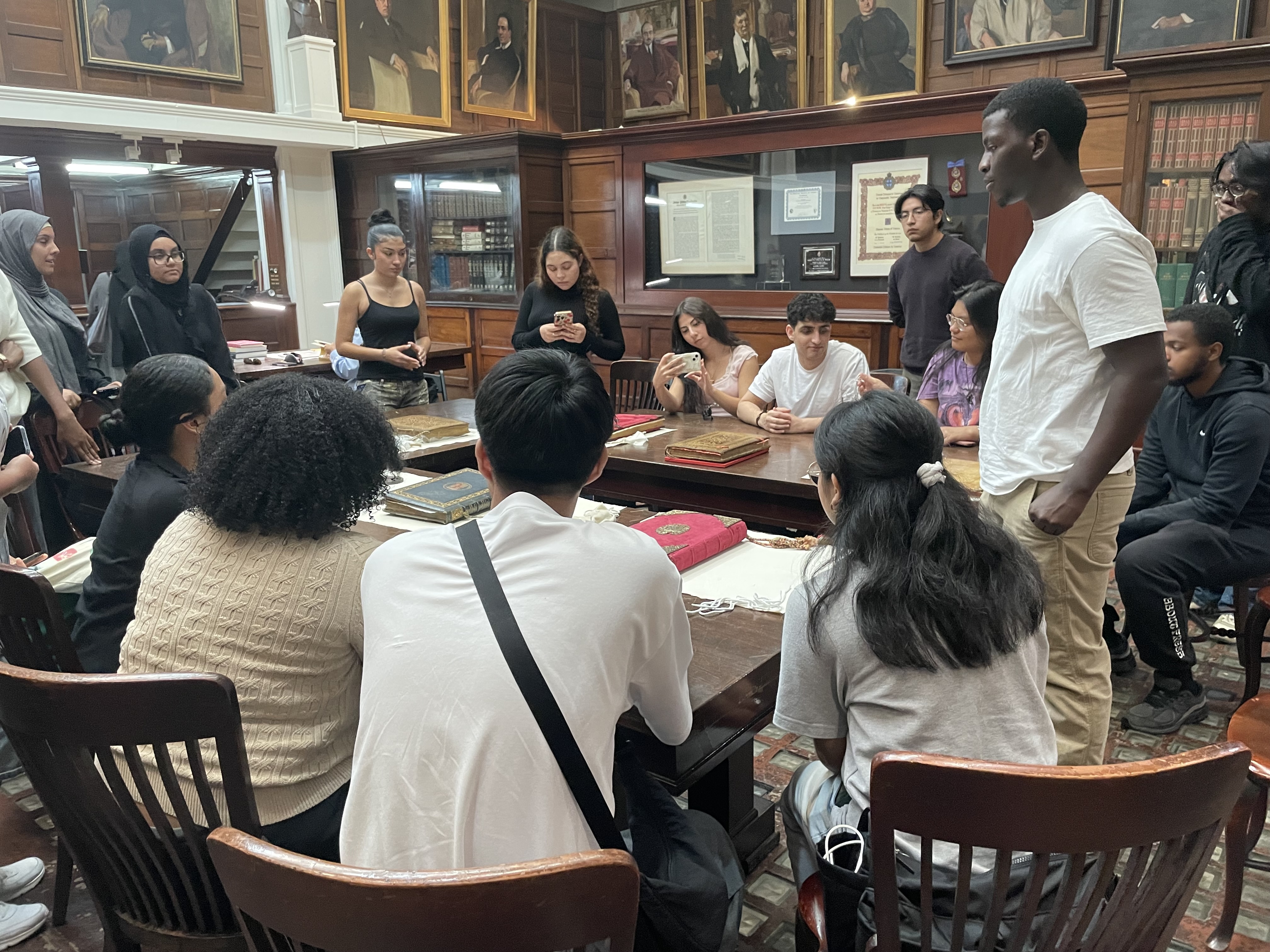
Students in Wunder's course look at objects in the Hispanic Society's collections. (Photo: Alex Irklievski)
February 23, 2026
Museum-goers who visit the exhibition “Spanish Style: Fashion Illuminated, 1550–1700” at the Hispanic Society Museum & Library can also hear the research, writing, and voices of Lehman College students from Professor Amanda Wunder’s honors history course in the show’s audio guide. The students produced the guide for the Bloomberg Connects app last fall.
Wunder specializes in the history of early modern Spain, art, and material culture, and she curated the exhibition, which runs through March 22.
Most students said they enrolled in the course because it included field trips to local art museums—they weren’t expecting to create a public-facing cultural resource. However, “I knew that our students would have really original and interesting things to say—and they did,” Wunder said. “My job was to give them the historical context for the museum objects and then help them edit their writing to communicate their ideas clearly and professionally.”
The editing process worked both ways. With Wunder guiding her students to write for the public, they read drafts of the exhibition labels she wrote and gave her feedback on whether the language was accessible for general audiences.
When she introduced the project on the first day of class, students faced a steep learning curve and had just 10 weeks to carry out independent research, write, and complete the recording process in time for the exhibition’s opening on November 6.
“The students did a phenomenal job of rising to the occasion,” Wunder said.
History major Charlotte Espinel enrolled because she wanted an immersive, object-based approach to Spanish culture.
For her segment, she studied two pieces of religious jewelry, examining how they expressed identity and faith, as well as style. “The thing I found most interesting about fashion and its historical connections was the ability of a physical object to embody a system of belief, a structure of power, and a way of life,” said Espinel.
“It became clear to me how much information even small objects like jewelry can provide regarding religion, social class, trade, and everyday life,” she said. “Fashion was not only a record of what a person wore, but also a record of what they valued, what they feared, and what they hoped for.”
Learn more about Wunder’s work and her book Spanish Fashion in the Age of Velázquez: A Tailor at the Court of Philip IV, in this book talk, and in a recent profile on the CUNY Graduate Center’s website.
Learn more about the exhibition at the Hispanic Society & Museum here.