


News
Search All News
Friday, October 23, 2026
Office Hours
Monday - Friday 9am - 5pmClosed Sat. and Sun.
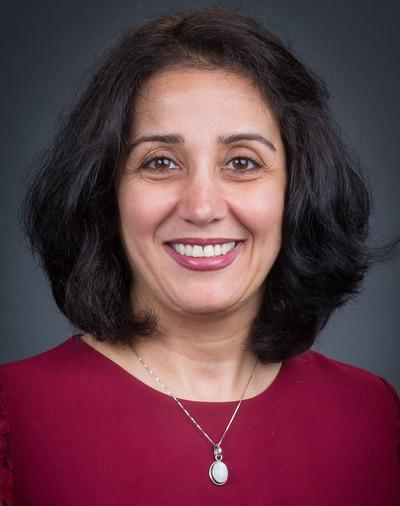
Faculty Spotlight: Professor Maryam Bamshad, Neuroscience
December 29, 2025
From her early education in England to her appointment at Lehman College in 1998, Maryam Bamshad, a neuroscientist in the Department of Biological Sciences, has been curious about the fundamental drivers of human behavior. Trained in biology at the University of Massachusetts Amherst and through postdoctoral fellowships at Georgia State University, she has studied how brain chemicals and hormones shape relationships and behavioral responses, in both animals and humans. We asked her what drew her to neuroscience, how her research has evolved, and what she values most about Lehman. (This interview has been edited for length and clarity.)
Q: What first drew you to biology and animal behavior?
A: As a child, I was always curious about human behavior and wanted to become a philosopher. At the University of Massachusetts, with loans and bills to think about, I took an introductory course in animal behavior to fulfill a general education requirement. I realized that human behavior and emotions aren’t that different from those of other animals. That epiphany led me to work in a lab studying prairie voles, and I eventually majored in biology—marking the beginning of my career researching the behavior and physiology of various animal species.
Q: How has your work changed over time?
A: As a college student, I studied how brain chemicals trigger paternal behavior in rodents. In graduate school and as a postdoc, I expanded my research to neurochemicals in rodents’ social communication and regulation of fat tissue. When I came to Lehman my research focused on socially monogamous prairie voles, identifying physiological factors that may keep males close and faithful to their mates. I also found that prenatal stress can produce males with a higher tendency for risk-taking and exploration, including non-monogamy.Maintaining a colony of prairie voles for large experiments took up a lot of time and it became difficult for me to mentor undergraduate students. My findings with prairie voles spurred me to investigate the role of stress in human behavior. Studying humans has allowed me to work with m ore students.
Q: What is one of the most compelling questions or issues you’re working on currently, and what do you hope it will make possible?
A: If a doctor suggests a medication with unpleasant side effects, does how they speak to you—condescendingly or sympathetically—affect whether you choose to take it? In my lab we’re studying how emotions shape people’s judgments and decision making, with implications for training doctors, nurses, lawyers, and future AI agents to better help people. I hope my work will help people become better critical thinkers by showing how emotions can affect decision-making—so we can make better choices without being negatively swayed, or even betrayed, by our emotions.
Q: As a researcher, what accomplishment are you most proud of?
A: My work with prairie voles was foundational to research sometimes referred to as the “neurobiology of love.” I discovered that vasopressin, a neurochemical, is involved in the regulation of monogamy in prairie voles, and I’m proud to have contributed to understanding how neurochemicals such as vasopressin and oxytocin regulate human trust and social bonding.
Q: What do you value about being at Lehman?
A: I value the freedom Lehman College has given me to pursue my passions in teaching and research, and I appreciate the courage and tenacity of Lehman students. Two undergraduate students who have left an indelible mark on me are Veneta Çallpani and Karina Xie. Exceptional students like them continue to inspire me to become a better teacher, researcher, and mentor.